
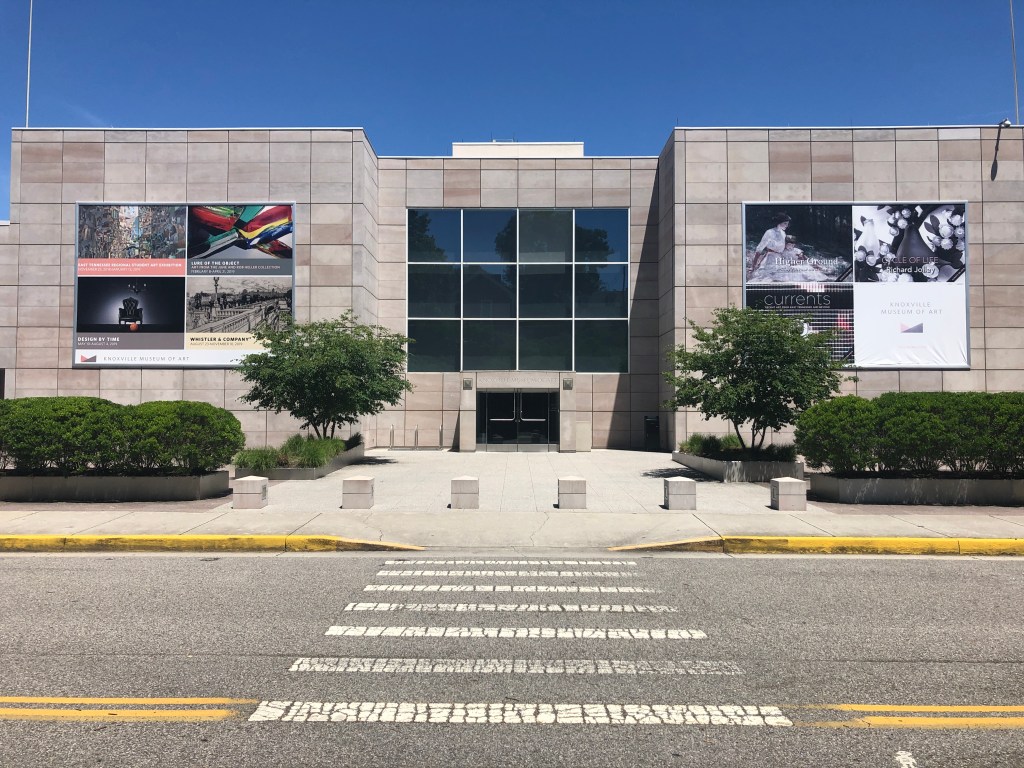
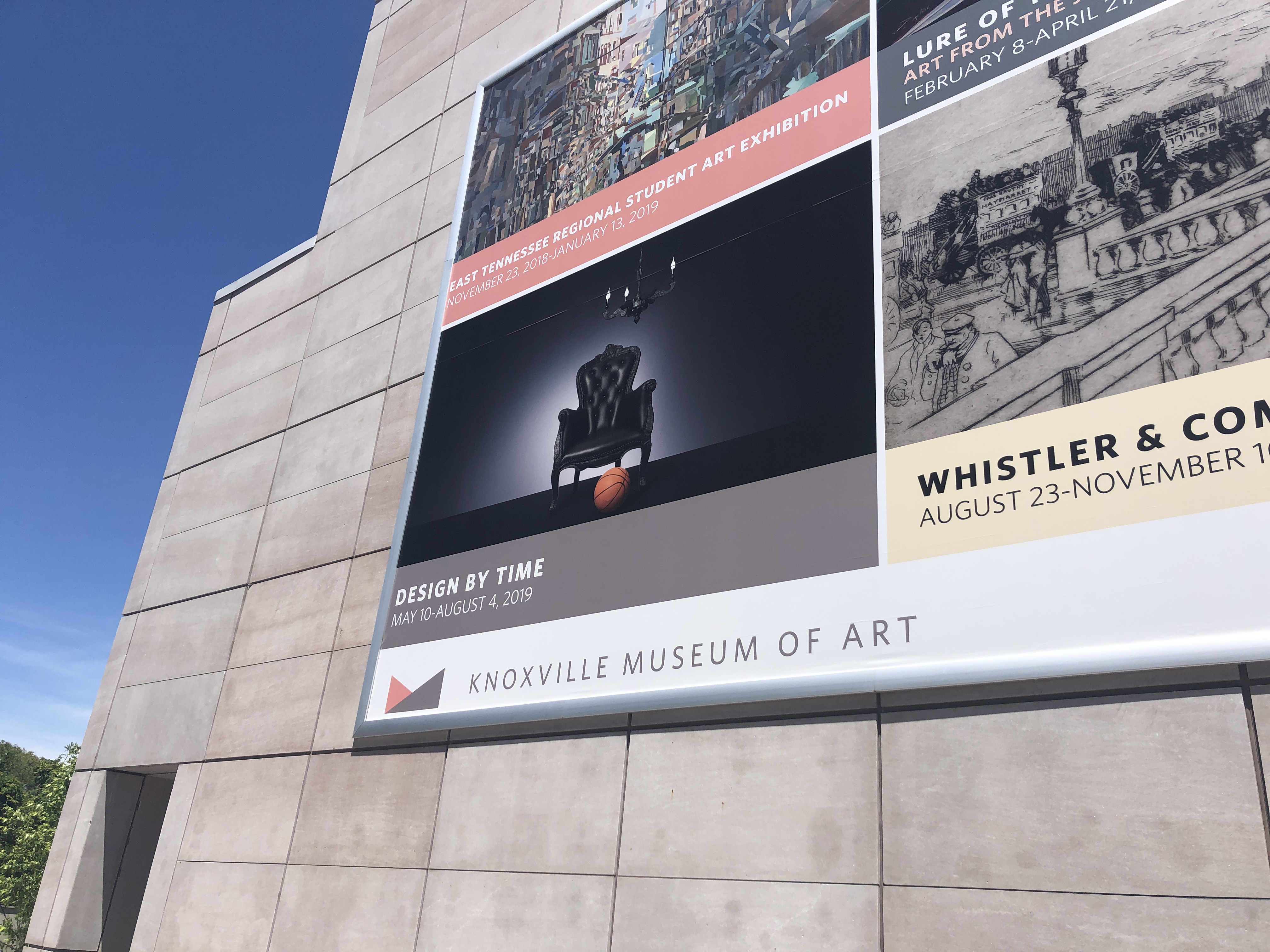
As Knoxville’s primary grown-up gallery, the KMA has some real responsibility to pull. Much like our airport, it is small, has giant windows on one side, and services an enormous geographical radius. This summer, its exhibition “Design by Time” proves that thoughtful curation can make even an hour’s stroll through the modest gallery halls feel well worth your time. Coincidentally, that’s what the show is all about: time.

Specifically, the exhibition is about how invisible forces like time shape the visible world. If that sounds heady, it’s my fault. The show itself is packed with breezy, clever pieces that express themselves quietly and clearly. You really ought to go to this show yourself, so I’ll avoid spoiling many of the pieces. But check this clock out.
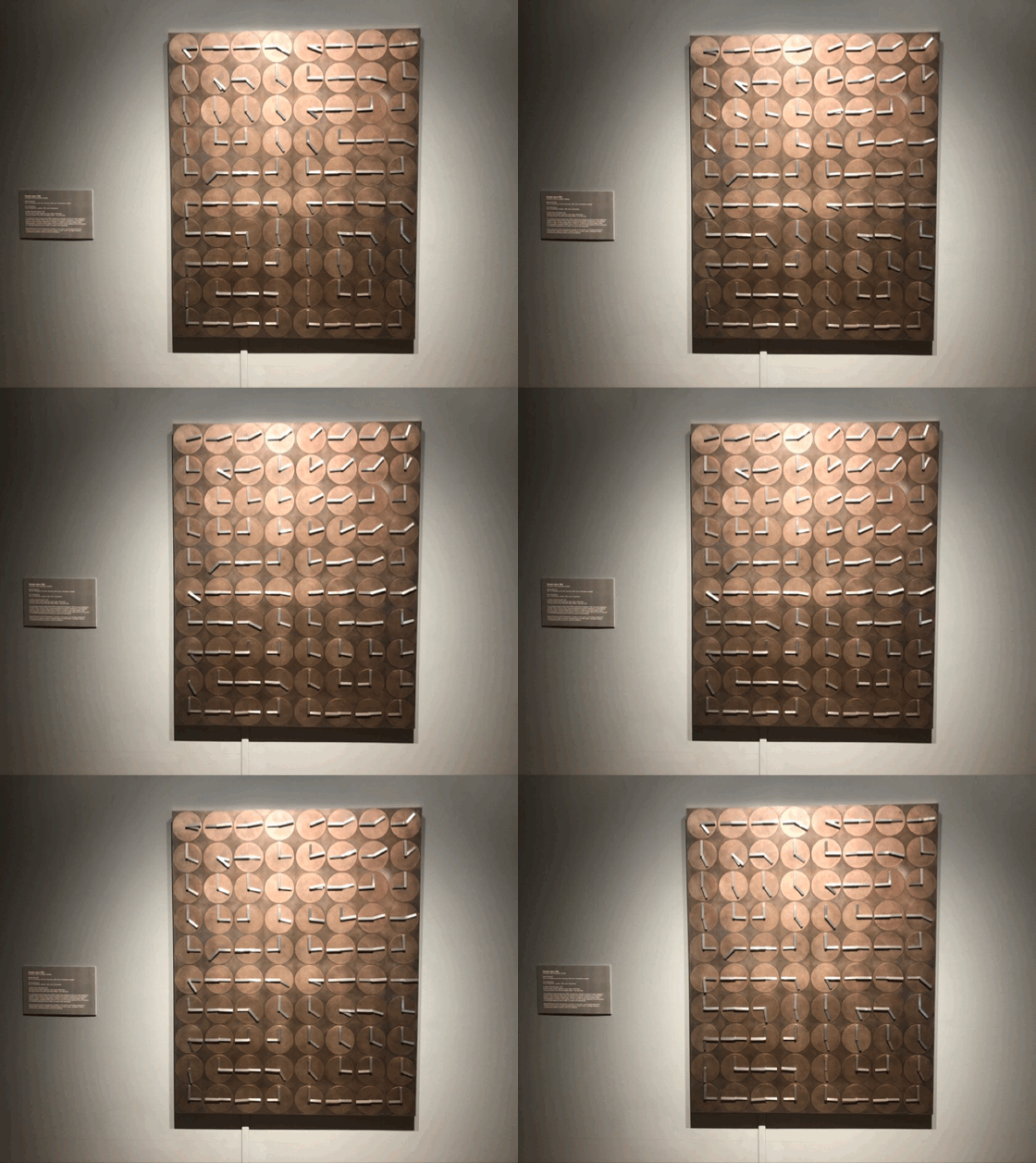
See that? That’s a big digital clock made up of smaller analog clocks. It tells the time on the minute, every minute. The clock hands spin individually, forming intricate geometric designs before returning, literally at the last second, to form a digital readout for the current time. This is working intellectually on all kinds of levels–the relationship between the analog and digital (all digital processes start as analog circuits), our perceptions of time in ever-diminishing increments (hours, minutes, seconds, moments), and the beautiful forms apparent when time as a measured quantity dissolves (as the numbers on the clock give way to abstract patterns). But it’s also mesmerizing and valuable in passing as a crazy clock.
That’s ten feet away from this record player:
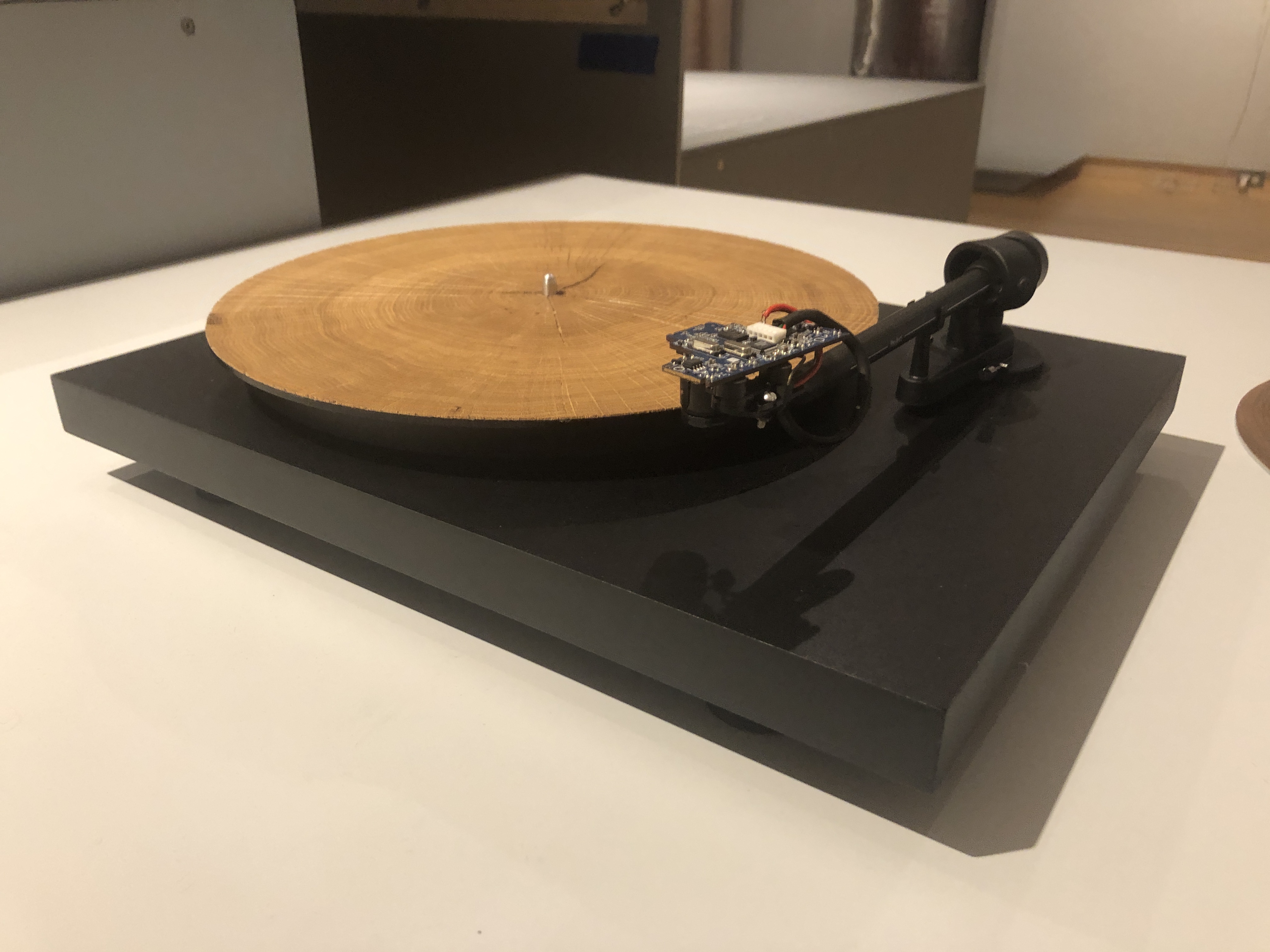
Here, the center of a spruce tree has been cut into the shape of a vinyl record and the tree rings mimic the grooves typically intended to catch the needle and generate sound. On a purely visual level, this says something about the insertion of the organic into the artificial. The industrial machine world processing and “playing” the organic, say. But there’s a twist. This phonograph is wired to a pair of headphones and the needle is an instrument capable of translating the grooves of the wood into a wild, atonal piano piece (which of course you can listen to). The implication is literal and astounding: the music you hear is a spontaneous interpretation of the rings of the tree, which are themselves a direct document of time. You hear how the tree weathered the years. Time becomes traceable. Shape becomes sonic. Unbelievable.
During my visit, a nursing home had brought its residents in for a tour. They were seated in folding chairs in a dark corner of the one of the gallery halls. A woman was on her feet, speaking loudly and excitedly to the eighty-somethings about the works and, appropriate for such a show, how each piece came to be. Each work’s history.

The longer I walked through the show with the wrinkly, gray-headed group in the room beside me, the various ruminations on time and its effect on physical objects–how objects are authored by their histories–pooled into self-consciousness. I saw my shape as a testament to my father and mother, tenth grade basketball practices, grief, and fast food. I left the museum and saw the sidewalk beaten under years of Fort Sanders foot traffic. I saw Knoxville imprinted with rivers and the 1982 World’s Fair. I saw the shaping that has been happening for a long time, on me and around me.
Go give this show your time and it will give time back.
Michael
 Balltower
I haven’t been to this exhibition yet, and I didn’t realize they had that Bartholomäus Traubeck piece! I’m excited. I remember reading about that elsewhere a little while ago and thinking it sounded cool.
LikeLike